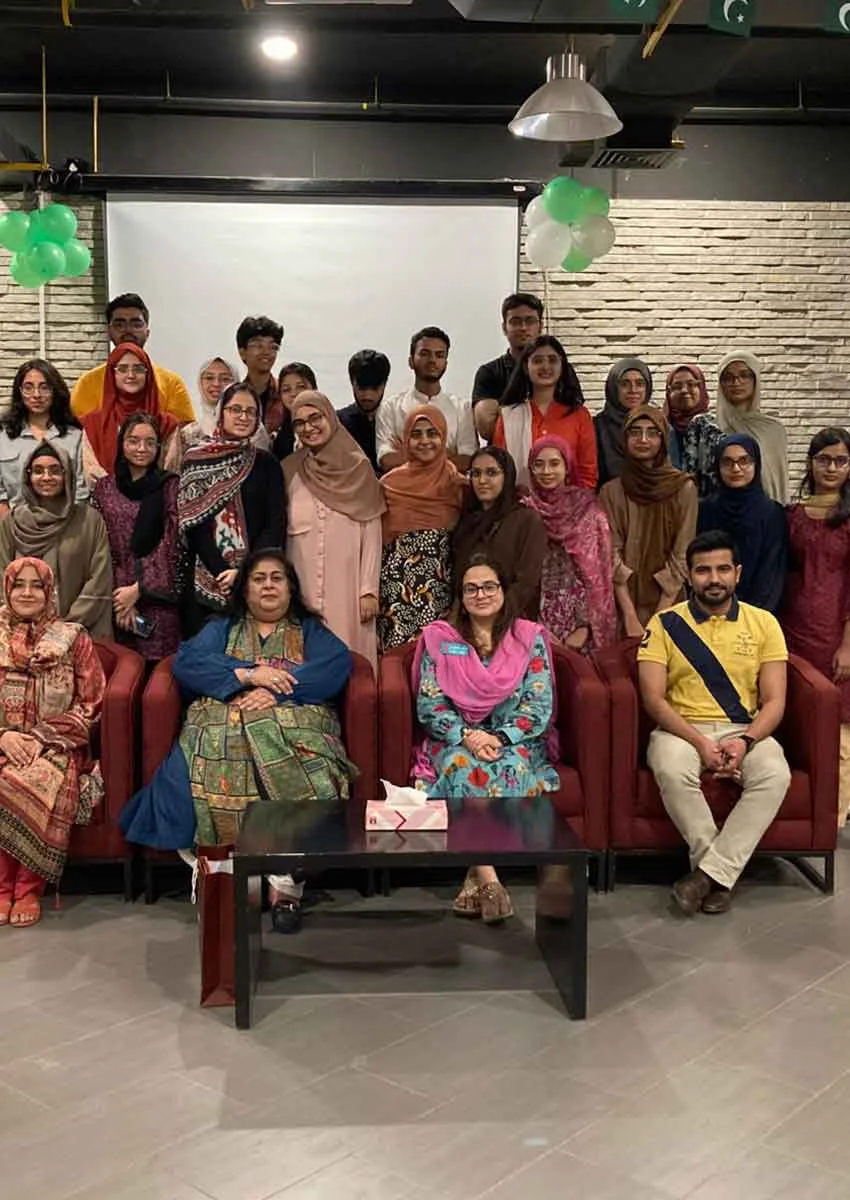
The Mental Health Ambassadors Program (MHAP) was initiated by the IBA Health and Wellness Center to engage students as advocates for mental health and wellness on campus. The program selects a motivated team of students from different programs to promote wellness events, encourage peer participation, and raise awareness about mental health within the IBA community. Students were chosen through a structured application and interview process to ensure their commitment and enthusiasm for the initiative. Working closely with the Wellness Team, ambassadors supported and participated in wellness activities, enhancing their personal and professional growth.
As part of MHAP, capacity-building trainings were conducted to equip ambassadors with essential skills and knowledge. The program began with a two-day Psychological First Aid Training on August 11–12, 2025, conducted by Prof. Dr. Qudsia Tariq, Senior Clinical Psychologist at the University of Karachi, focusing on early identification of emotional distress, providing empathetic peer support, managing crises, and making timely referrals to mental health services. This program helped students develop awareness of how to support peers in coping with stressors around them.
Additional sessions were organized to foster the ambassadors growth and development. A Mental Health Stigma and Advocacy session led by Mr. Ahmad Ali, Clinical Psychologist at IBA, focused on common mental health misconceptions, strategies to challenge stigma, and ways to advocate for inclusive and supportive practices among peers. Another session on Personality Development and Self-Awareness conducted by Ms. Humera Qutb, Wellness Counselor at IBA, helped students improve self-reflection, communication skills, emotional intelligence, and confidence, enabling them to more effectively lead wellness initiatives.
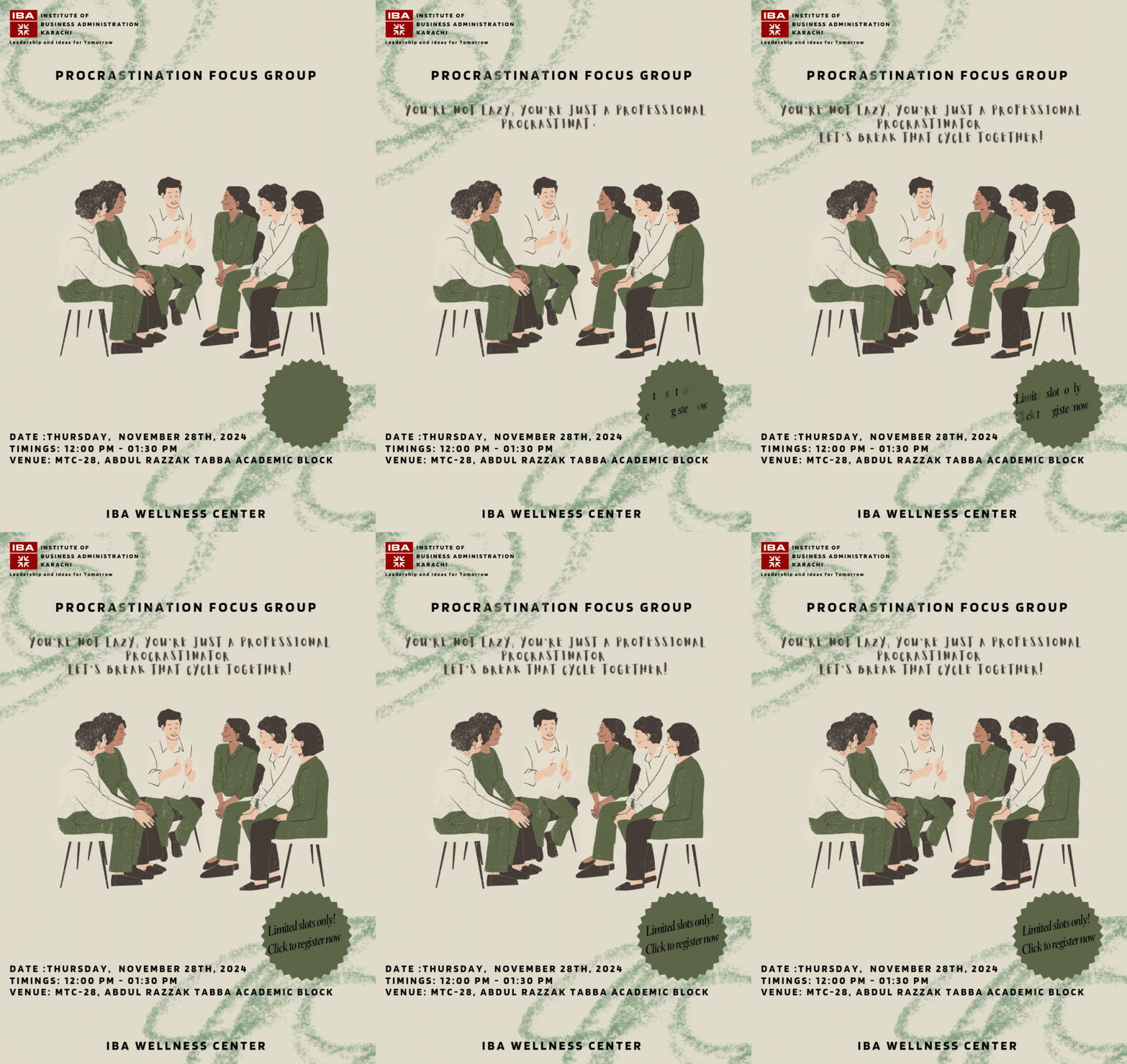
Ambassadors also participated in a focused group session led by Dr. Muhammad Shameel Khan, Assistant Professor at IBA and expert in psychotherapy, which emphasized self-reflection and personal development of ambassadors. This session allowed students to explore their own experiences, identify growth areas, and strengthen their capacity to support others.
By empowering students to lead and advocate for wellness initiatives, MHAP strengthens engagement, visibility, and participation in mental health programs while fostering a supportive and inclusive campus environment.